Vietnam By Iain Bell – Travel Bureau
Vietnam is a diverse country where the colours are vivid, the landscapes are striking, the coastline is full of drama, the history is compelling and restaurants provide a truly authentic dining experience. It’s been shaped by its war-torn past and its status as a Communist country, but there’s much more to Vietnam than that, and if you’re prepared for an adventure as well as a holiday, it’s full of extraordinary experiences.
My journey began in Ho Chi Minh City, the former Saigon, with a stay at the Park Hyatt on Lam Son Square, which overlooked the impressive Opera House. My first impressions were of a cosmopolitan, glamorous, fast-paced city – certainly not quite what I was expecting. I was bowled over by the energy – rush hour has to be seen to be believed, but no matter what the time of day, the city’s streets are packed with people making the most of the restaurants, bars and shops. It has a reputation for the best food in the country – a claim I tested at the Riverside Café, part of the Renaissance Riverside Hotel, overlooking the Saigon River. As a coastal state, Vietnam is renowned for its seafood, and sure enough, the sophisticated seafood buffet boasted some of the biggest prawns that I have ever seen during my career as a globetrotter! Most people have heard of the Durian – a fruit with a notoriously pungent scent, but what about the Mangosteen, unique to South East Asia, with its sweet and sour flavour, or the poetically named Star Apple, Custard Apple and Green Dragon? Vietnam offers a true taste of the exotic.
The city has a long and fascinating history – Saigon originally grew from a small fishing village into a thriving settlement. Conquered by the French in 1859, it became known as the ‘Pearl of the Far East’ and ‘Paris in the Orient’, and you can still see the French legacy today in some of the buildings that remain – such as Notre Dame Cathedral and the old Post Office. In 1954 Ho Chi Minh’s communist Viet Minh forces defeated the French, and Vietnam was partitioned into North and South Vietnam, with the government of the South, the Republic of Vietnam, holding its seat in Saigon. On April 30, 1975, North Vietnamese troops captured Saigon, ending the Vietnam War. At the Reunification palace, you can see the tank that drove through its gates, ending the war. Following North Vietnam’s victory, Vietnam was unified and the capital of the reunified Vietnam became Hanoi, while Saigon was renamed Ho Chi Minh City.
After a few days of exploring and making the most of what the city had to offer, I made the five hour road trip to Phan Thiet, one of the only beach resort style destinations in Vietnam. My base, the Blue Ocean Resort, was as relaxed as I was hoping it would be and its location in the centre of the resort made it ideal for the beach and the local restaurants.
‘The Citadel and Imperial City recall Beijing’s Forbidden City – the area inside the inner wall, where the emperor’s Palace is, was reserved solely for the Imperial family and the royal household.’
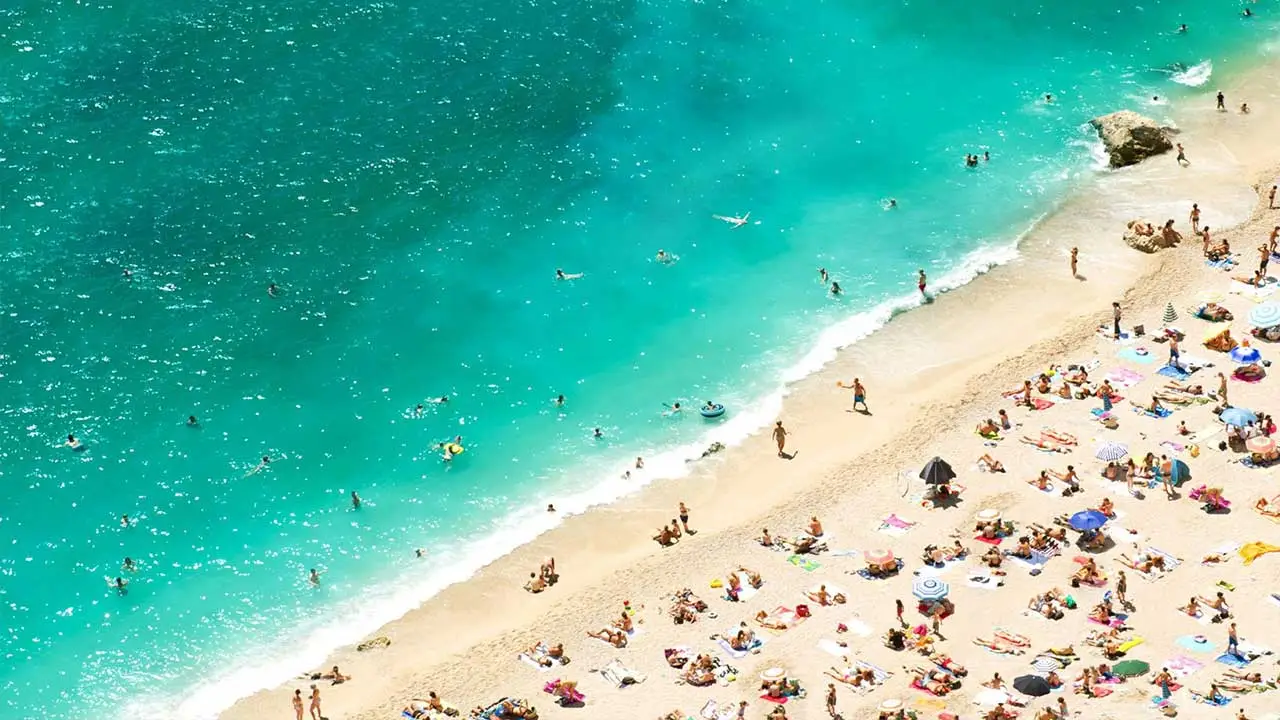
The never-ending sand beach at the Mui Né Peninsula, set in front of red sand dunes, is well on its way to becoming one of Vietnam’s most popular resorts. Mui Ne itself is a former fishing village, now a thriving town, and apparently it’s the capital of kite-surfing in Vietnam, as well as being renowned for other alternative sports from sky-diving to sand dune gliding. Fantastic red and white sand dunes, which can be explored on a jeep tour, are a must- see. Another destination worth a visit is the ‘Fairy Stream’, a scenic creek winding through sand cliffs from deep in the dunes out to the beach. Nearby Bai Rang (Rang Beach), nestled in the middle of a coconut palm forest, is considered one of the most beautiful beaches in the area of Phan Thiet.
Next stop was Nha Trang, around a 45 minute flight from Ho Chi Minh City. On the south central coastline, it’s reputed to be the beach capital of Vietnam. The 30 minute drive from the airport to the resort takes you through mountains and sand dunes – apparently the sand from these is so fine that it is exported to Japan in order for them to make crystal. The Six Senses Ninh Van Bay is not on an island, but the only way to reach it is by launch. This all-villa eco resort is built in traditional Vietnamese style, along a superb sandy beach with a forested mountain backdrop. Each villa boasts its own pool or plunge pool, and a garden terrace or large sundeck. There are three restaurants, and a bar that doesn’t close until the last person leaves. Their wine cellar is unique – built into the rock, the wine is actually stored in mini caves. With a truly fabulous spa, and activities from windsurfing and waterskiing to tennis, volleyball and snorkeling, this is a spectacular five star resort ideal for the whole family. An hour north of Nha Trang is Da Nang, the third largest city in Vietnam after Ho Chi Minh City and Hanoi. Its airport was one of the busiest ports during the war with America. Though Da Nang isn’t as popular with tourists as other nearby destinations, its blend of relaxing beaches and fast-paced city life is very appealing. One of its most famous attractions is the Cham Museum, which exhibits more than 300 statues, reliefs and sculptures found at nearby My Son, the former capital of Cham Kingdom. Around ten km southeast of Da Nang is the Marble Mountain. Climb past its rocky limestone outcrops to the top of the forested cliffs for spectacular views of Non Nuoc Beach and the South China Sea. Da Nang is also an ideal base for exploring nearby attractions. Hoi An, south of Da Nang, is a town built along the banks of the Thu Bon River and a World Heritage Site dating back to the 16th century. The architecture is simply amazing.
There is a real hustle and bustle on the streets of the town; I took a walking tour of old town Hoi An, with its cobbled narrow streets and many tailors’ shops stocked with wonderful vibrant coloured materials. I’d also recommend visiting Quan Cong Temple and Tan Ky House, a 19th century home. If you have a couple of days in Hoi An, stay at the award-winning four star Life Resort Hotel. It’s on the doorstep of the old town and offers a great base to make the most of the culture.
My next stop was Hue, a World Heritage Site best known for its Citadel, palaces and pagodas, tombs and temples. Once the imperial capital of the Nguyen Dynasty, lying along the banks of the Perfume
River, Hue is known as the cultural heart of Vietnam. The Citadel and Imperial City recall Beijing’s Forbidden City – the area inside the inner wall, where the Emperor’s Palace is, was reserved solely for the Imperial family and the royal household. Most of the architectural attractions are along the banks of the Perfume River, from the tomb of the Emperor Minh Mang to the Thien Mu Pagoda. My base in Hue was the Saigon Morin, which dates back to 1901 and was the first hotel in Central Vietnam. Carefully restored, it retains its character while offering modern comfort. For those seeking a more restful pace of life, Ana Mandara is a beachside resort just 15km east of Hue, set amidst three acres of tropical parkland on a white sandy beach.
On arrival in Hanoi, the capital of Vietnam, the first thing I noticed was the total contrast to Ho Chi Minh City. It’s less glitzy, more traditional – lots of people eating street cafes, sitting on small stools eating lunch and gossiping. The historical Old Town and the colonial French Quarter sit beside thousand year old temples in a vibrant city that embraces old and new.
The above article was written by Iain Bell of Travel Bureau after his last visit to Vietnam in December 2011 and we thank him for permission to use his work
Send to Kindle
Find the best deals »